June 11; ages 5-11 Forest school

Parent resources
Continue the Learning at Home
One of our favorite parts of forest school is seeing how a simple observation outdoors can spark hours—or even days—of curiosity. Here are a few things you can ask your child about from this week's adventure.
Questions to Ask Your Child
About Fire Building
What are the three things every fire needs?
What was the hardest part about using a ferro rod?
Why do you think we practice making fire safely?
How many tries did it take before you got a spark?
About Butterfly Lagoon
Why do butterflies gather in certain places?
What did you notice about the butterflies and charcoal?
What kinds of insects did you find in the water?
How many different butterfly colors or patterns did you see?

About Spittle Bugs
What did the "spit" on the plants look like?
What was hiding inside the foam?
Why do you think the bug makes that foamy shelter?
About Snakes
How big was the snake we saw compared to other snakes you've seen?
What do snakes eat?
Why are snakes important to an ecosystem?
About Persistence
What was something that didn't work the first time?
How did it feel when you finally figured it out?
Why is it important to keep trying before asking for help?
Family Learning Resources
Spittle Bugs (Froghoppers)
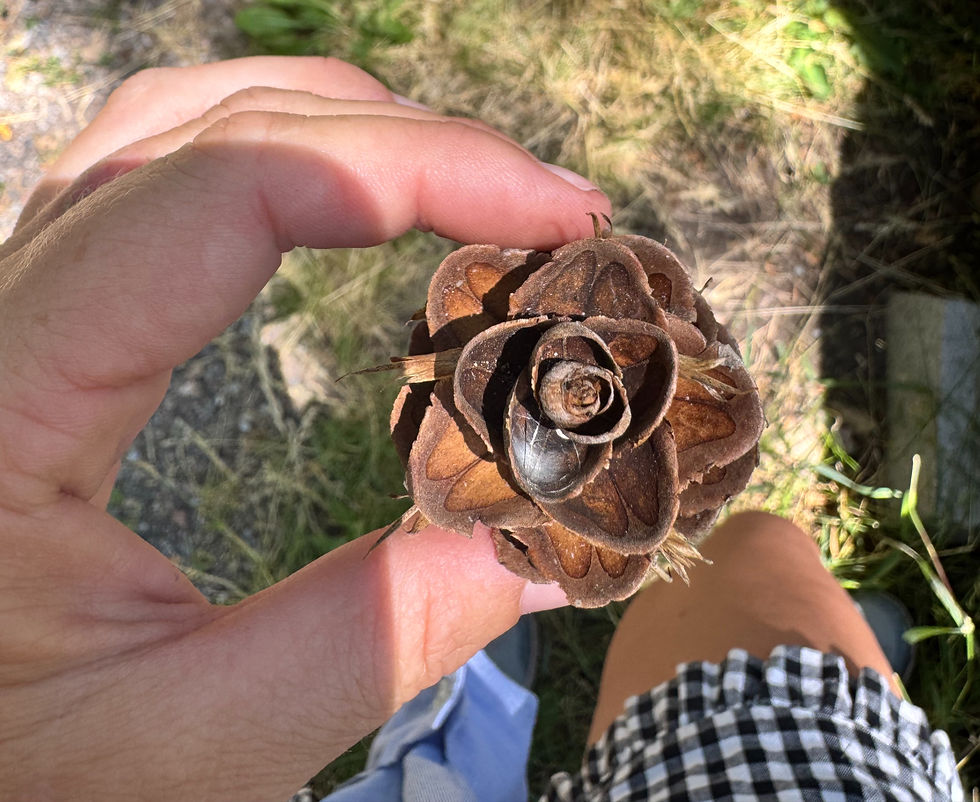
The "spit" we found on plants was likely made by young spittle bugs. The foam protects them from predators and helps keep them from drying out.
Videos:

Ferro Rod Fire Starting
We spent a lot of time practicing with ferro rods. This is a fantastic skill because it teaches patience, coordination, and persistence.
Videos:
Nature Notes from This Week
How Big Do Garter Snakes Get?
Common Garter Snake are usually between 18 and 42 inches long, though large individuals can occasionally exceed 4 feet.

They typically have:
Long, slender bodies
Yellow, tan, or cream-colored stripes running down their backs
Checkered patterns between the stripes
Rounded heads that are not much wider than their necks
They eat:
Earthworms
Slugs
Frogs
Tadpoles
Small fish
Occasionally small rodents
The giant snake we observed may have been an especially large garter snake, though it can sometimes be difficult to identify a snake from a quick encounter in the wild.

Is Charcoal Edible?
Generally, no, the charcoal left behind in a fire pit is not something people should eat.
However, some animals and insects are attracted to charcoal and ash because they contain minerals and salts. Certain butterflies are known to gather on mud, animal tracks, and old fire pits to collect nutrients that are difficult to find elsewhere.
Why Do Butterflies Love Old Fire Pits?
Many butterflies engage in a behavior called "puddling."
Puddling is when butterflies gather on wet soil, mud, animal droppings, or even old campfire remains to collect:
Sodium
Calcium
Potassium
Other minerals
The charcoal and ash in old fire pits can contain these minerals, which may explain why the butterflies at Butterfly Lagoon seemed especially interested in the charcoal. The kids made a fascinating observation and then tested their idea—exactly the kind of curiosity-driven science we love to see in forest school.
Today’s Thursday class felt like one of those especially memorable days where the kids led the direction of the whole adventure.
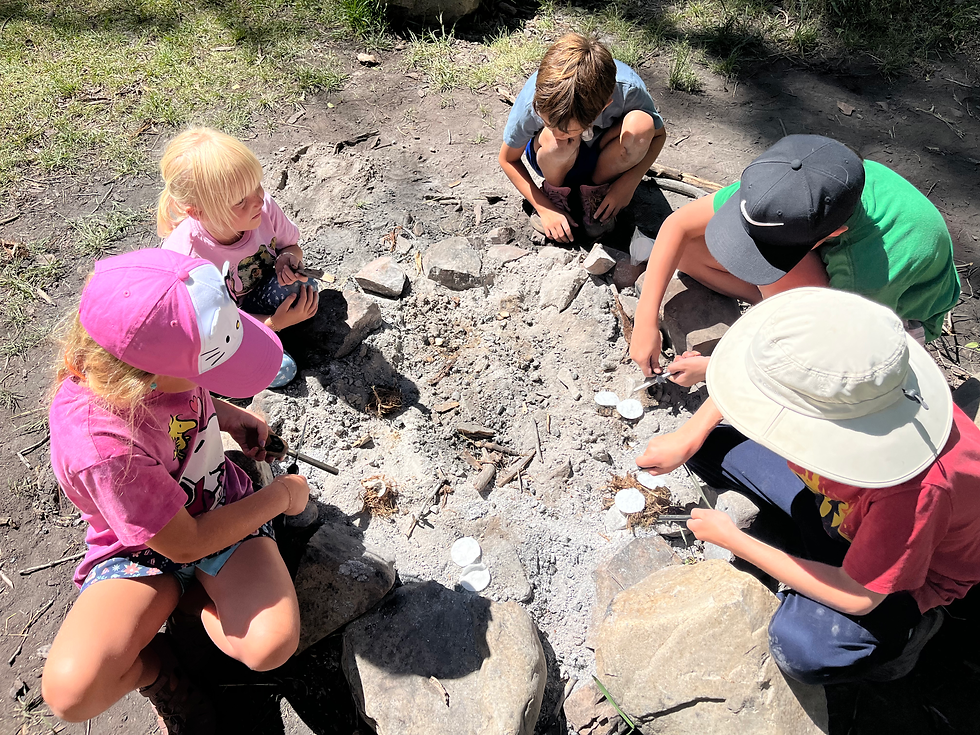
We hiked up and settled into a nice spot to hang out, and right away a lot of the kids got really interested in making fire. We had planned to work on cordage and weaving, and even make paracord bracelets, but once we got started it was clear that fire building, carving, and tree climbing were the things that had everyone’s attention.
We spent a good amount of time talking about what fires need, where to gather materials, and how to do it safely. Then we gathered around the fire pit and worked with ferro rods, which is always such a good lesson in patience and persistence. It is never something most kids get on the first try, and that in itself becomes part of the learning. It is a good reminder that not everything is instant, and sometimes it takes several tries before something clicks.

Paige has such a good response when kids ask for help too. She’ll ask, “How old are you?” and then tell them to try that many times before asking again. Usually they get it before they even reach that number, but I love that lesson of sticking with something and not reaching for help too quickly.
Carving was another big hit today. We always go over our safety rules first, and the kids use a protective glove on one hand and small carving knives that are made for this kind of work. We make sure everyone is seated somewhere stable and comfortable, and of course there is always close supervision.

It is fun to watch them work so hard and focus so deeply on a skill like that.
After a while we made our way to Butterfly Lagoon, which is always a favorite spot. It is basically a shallow, moist stretch of river that seems to draw in butterflies and moths, and it makes for such a fun place to explore and play. The kids were noticing all kinds of little things there, from small critters in the shallow water to the way the butterflies seemed especially attracted to the charcoal in the fire pit. A few of them started experimenting with putting a little charcoal on their hands to see if it would attract the butterflies too.

We also noticed some plants that looked like they had wads of spit on them. When we opened them up, there were little bugs inside, which led us into learning about spittle bugs. That was one of those perfect nature-school moments where curiosity turns into real observation and discovery.
There were plenty of little moments throughout the day where I looked around and saw kids completely absorbed in something interesting.
Some were carving, some were figuring out how to cross the river in different ways, some were watching bugs in the water, and some were just quietly doing their own thing in their own little world.
I love days like that. It feels like the kids are fully present, fully engaged, and learning without even realizing how much they are taking in.
We also came across what may have been the biggest garter snake I have ever seen. It might not have been a garter snake, but it was definitely a huge snake in the middle of something intense in the brush. And to top it off, one kid had a caterpillar crawling on him for almost an hour, even on his face at one point, which was pretty hilarious.

Overall, it was such a unique and good day outdoors. A little fire, a little carving, a little river exploration, and a whole lot of curiosity.