June 4th ages 5-11: New Friends, Fire Skills, and Summer Curiosity

Parent Resources
Topics We Explored
Fire science and fire safety
Ferro Rod

Friction fire demonstration (bow drill):
Watercolor nature journaling
Plant and insect observation

Fort building
Whittling
Cooperative play
New Vocabulary
Tinder
Ferro rod
Bow drill
Friction fire
Entomologist
Aphid
Questions to Ask Your Child
What are the three things a fire needs?
What was harder: using a ferro rod or a bow drill?
What did the entomologists teach us about ants and aphids?
What plant did you choose to paint?
What did you create while whittling or building?
One of my favorite parts of the first week of the month is welcoming new students. There is always a little excitement and anticipation as cars begin pulling into the parking area. Every vehicle that rounds the corner has me wondering, "Is that one of our new families?" Even after all these years, I still find myself walking over to greet just about every car.
Finding our meeting spots can sometimes be an adventure of its own. We love being tucked away in beautiful, remote places, but the tradeoff is that they are not always easy to find. We do our best to make sure families have our contact information, but cell service in the canyon has its own opinions about whether it wants to cooperate. Still, there is something special about gathering in a place that feels a little hidden away from the rush of everyday life.
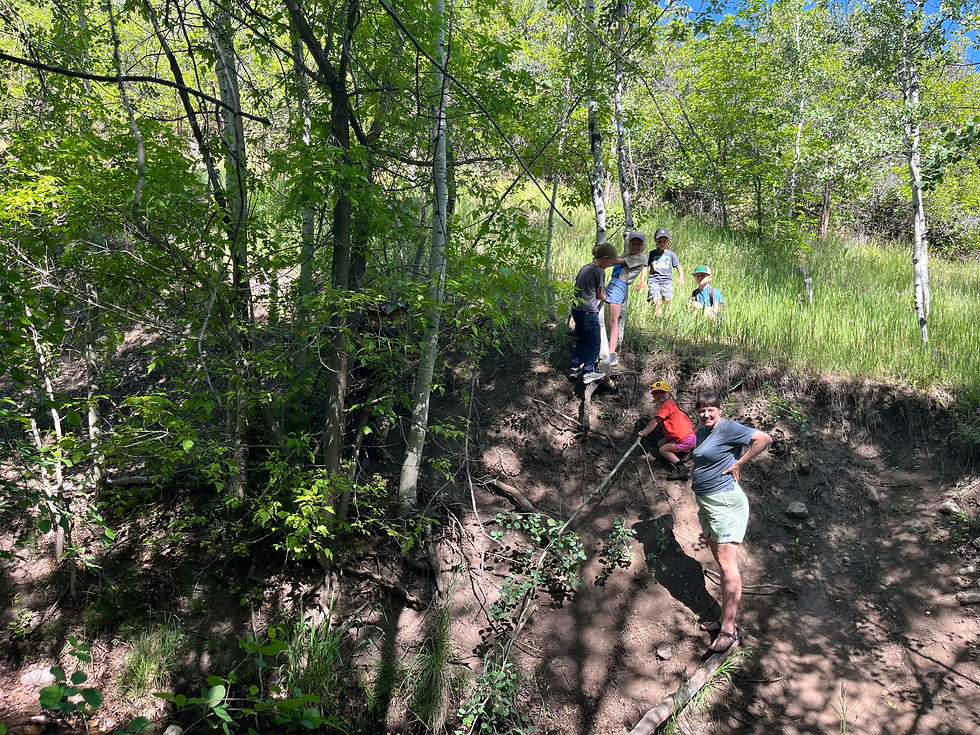
As soon as everyone arrived, many of the kids—especially some of our new students—gravitated toward a fort just across the river from the parking area. It is funny because it sits on one of the steepest sections of the riverbank, yet it has become a favorite destination. Every time we visit, the kids seem drawn back to it, eager to improve it, explore it, or simply spend time there together.
After gathering in our opening circle and reviewing our most important guideline—staying within sight and sound—we headed up the trail.
For some children, especially those who are new to outdoor programs, the hike can feel like a big challenge at first. The distance itself is not particularly long, but learning what your body is capable of can take time. One of the wonderful things about forest school is watching children discover that they can do hard things. By the end of the day, many of the same kids who wondered if they could make it up the trail were moving confidently through the forest.
Our first stop was a spot we often enjoy during the winter months. Large logs stretch across the river, creating a natural jungle gym that the children love to explore. During the summer, however, the thick leaves create a completely different environment. Kids can disappear from view in just a few steps, so after some exploration we gathered together and split into two groups.
One group joined Miss Kaitlyn to learn about friction fire. She demonstrated how a bow drill works and explained the patience, practice, and persistence required to create fire using only natural materials and friction. Some of the students had the opportunity to try it themselves and quickly learned that this ancient skill takes far more effort than it appears.

Meanwhile, I worked with the students who were newer to fire starting. We talked about the basic ingredients fire needs and spent time gathering tinder. Then we practiced using ferro rods to ignite cotton tinder. This is one of those activities that seems simple until you try it. No one succeeds on the first strike. It takes adjustment, problem-solving, and perseverance. Watching the kids stick with it through frustration and eventually experience success is one of my favorite things.
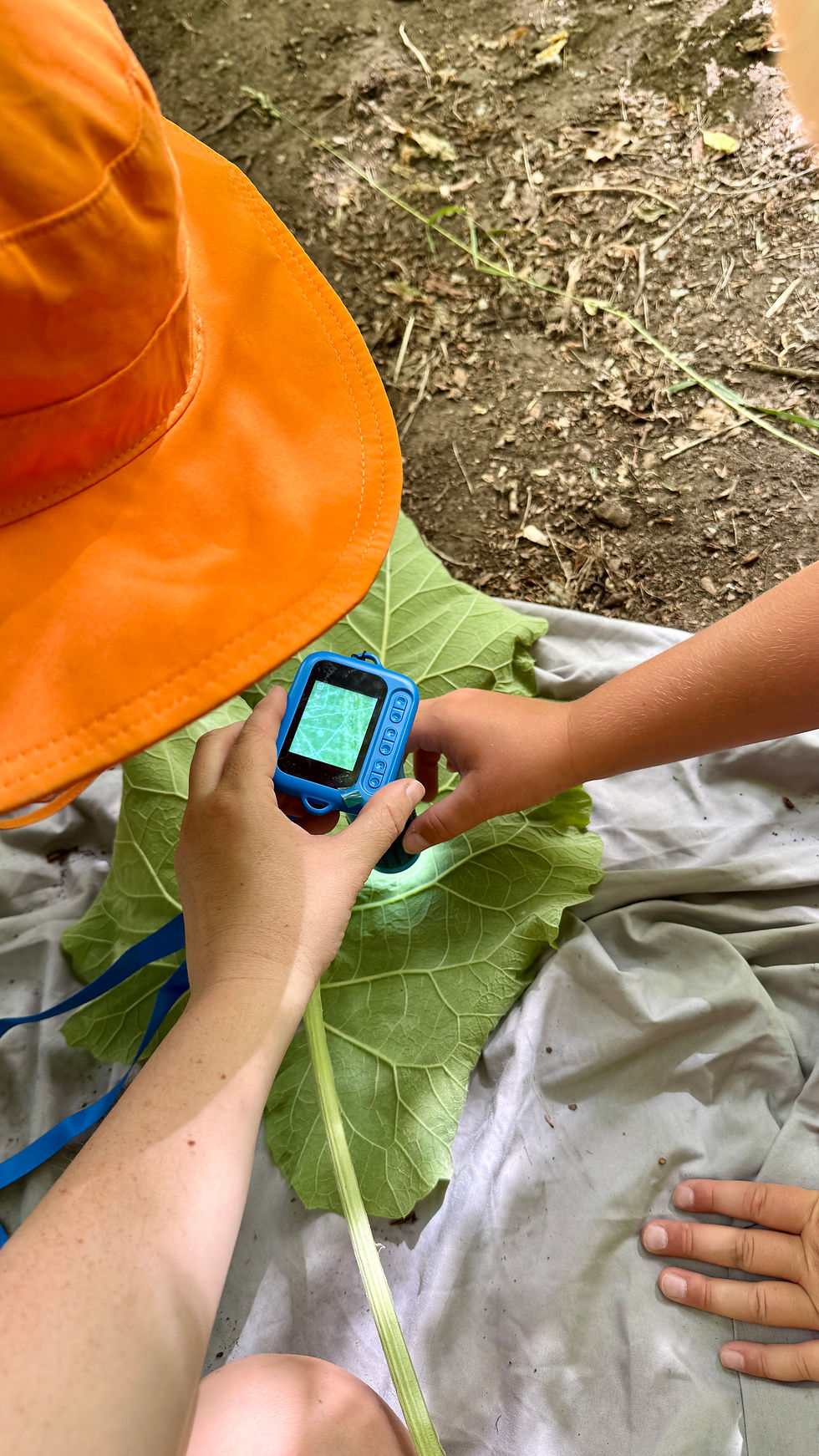
While we were working, we happened to meet a pair of entomologists on the trail. They shared some fascinating information about aphids and ants. The kids were amazed to learn that ants actually protect aphids from predators such as ladybugs and, in a way, keep them almost like tiny livestock. It was one of those unexpected forest school moments where learning appears naturally through curiosity and conversation.

Later, we packed up and moved to a more open area that gave the children room to spread out and explore. Hammocks appeared between trees, blankets were laid out, and the pace of the day shifted into a slower rhythm.

Miss Kaitlyn introduced a short watercolor lesson focused on observing and painting plants. As is often the case, the lesson itself was brief. We like to offer invitations rather than requirements. Everyone has the opportunity to learn something new, but those who want to go deeper are free to stay with the activity while others follow different interests.
Some students spent a long time painting and carefully observing the details of leaves and plants around them. Others returned to practicing fire skills. A large whittling circle formed and stayed active for much of the afternoon. One student even engineered an enormous slingshot and recruited a few friends to help test its range. Between the laughter, conversations, projects, and exploration, the campsite felt full of creativity and connection.

One thing that always takes time with a new group is learning how to care for our shared space at the end of the day. Cleanup is about much more than packing up personal belongings. It means looking around and asking, "What can I do to help the group?" Gathering forgotten items, taking down hammocks, picking up stray bits of trash, and making sure we leave the forest better than we found it are all skills we practice throughout the year.
As the afternoon came to a close, we packed up our gear and made our way back down the trail. We ended the day the way we often do—standing shoulder to shoulder in a circle, arms around friends, celebrating another day spent outdoors together.
"One, two, three..."
"BE A BUFFALO!"