Friday June 26th Teen Group

Building Bridges, Learning New Skills, and Celebrating Growth
After two weeks of challenging hikes and pushing ourselves to new limits, this week's Teen Forest School had a different rhythm.

Instead of focusing on covering miles, we slowed down, settled into our favorite spot along the river, and gave everyone the opportunity to finish the projects they had been working on throughout the month.
One of the things we love most about our teen program is how quickly new students find their place. Even those attending for the very first time jumped right into the day's activities.
Some picked up carving tools to continue working on bows and other creations, while another student immediately took on an ambitious project—building a bridge across the stream using logs, rocks, and branches. It was a perfect reminder that creativity doesn't require instructions; sometimes it just needs space to grow.

Of course, no relaxing day in the forest stays quiet for long.
Before we knew it, a friendly water fight had erupted across camp. It wasn't long before everyone agreed that Mr. Kyle should be the primary target! After a coordinated effort from just about every direction, he was completely soaked from head to toe. There was plenty of laughter, lots of splashing, and a reminder that some of the best childhood memories come from the simplest moments.
While the fun was unforgettable, the learning never stopped.
We divided into smaller groups for hands-on lessons that taught practical wilderness skills.
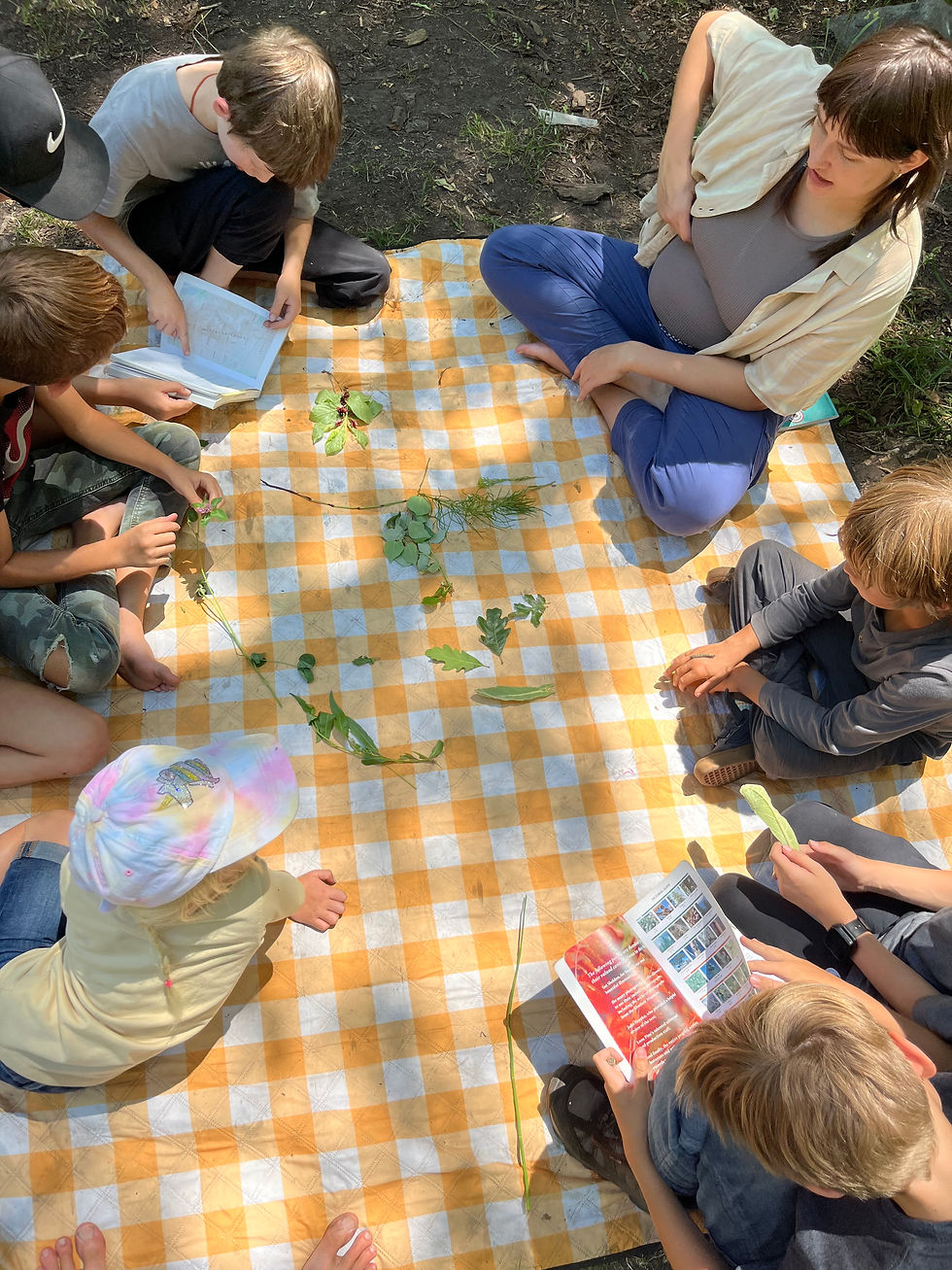
One group explored plant identification by studying leaf shape, leaf margins, and overall plant structure. Along the trail, students identified several native plants, including Black Twinberry. While its berries may look inviting, the students learned that they are not edible and practiced using observation rather than assumptions when identifying plants.
The second lesson focused on one of the most important survival skills in the outdoors: finding safe drinking water.
The teens learned the important difference between filtration and purification—two words that are often used interchangeably but accomplish different jobs.
Together, we built a simple water filter using a plastic bottle layered with gravel, sand, charcoal, and cotton. Students poured muddy river water through the filter and watched as the water became dramatically clearer.
That naturally led to a discussion about why clear water isn't always safe to drink. We talked about bacteria, viruses, and microscopic organisms that can't be seen with the naked eye, and why filtering alone doesn't always make water safe.

Each student received a personal water purification straw and had the opportunity to safely drink water directly from the river. Watching their reactions was priceless—it felt like discovering a real-life superpower.

The highlight of the afternoon was our project presentations.

Over the past several weeks, students have invested time, patience, and creativity into personal projects ranging from woodworking and carving to engineering challenges and outdoor craftsmanship. Presenting those projects gave everyone the opportunity to celebrate not just the finished product, but the perseverance and problem-solving that went into creating it.

For the first time, our teen group met up with
the younger Forest Friday class on the trail, and we all walked back together. It turned into one of those moments that wasn't planned but somehow felt exactly right. The older students naturally encouraged the younger ones, conversations flowed between age groups, and by the time we reached the trailhead, everyone gathered together in one large circle with arms around each other.
It was a simple ending to a wonderful month, but one that reminded us why community matters so much.

Outdoor education is about far more than learning wilderness skills. It's about building confidence, practicing leadership, creating
friendships, and finding belonging. Looking around that circle, it was impossible not to feel grateful for the incredible group of young people who make this community what it is.
Continue the Learning at Home
Want to practice this week's outdoor skills as a family? Here are a few ideas to keep the adventure going.
💧 Build a Simple Water Filter
Using a plastic bottle, gravel, sand, charcoal, and cotton, build your own demonstration filter at home. Compare muddy water before and after filtration, then talk about why filtered water still needs to be purified before it is safe to drink.
🌿 Practice Plant Identification
Visit a local park or trail and challenge each family member to identify three different plants using their leaf shape, margins, and growth patterns. Remember: never taste a plant unless it has been positively identified as safe.
🪵 Create a Nature Engineering Challenge
Using only sticks, rocks, and natural materials found on the ground, see who can build the strongest miniature bridge, shelter, or tower. Encourage creativity and teamwork while respecting living plants and wildlife.
🎒 Review Water Safety
Talk together about the differences between filtration, purification, boiling, and chemical treatments. Ask your child when each method might be useful during an outdoor adventure.
📚 Learn More Together
For families interested in learning more about this week's topics, here are a few excellent resources:
The National Park Service offers family-friendly information about outdoor safety, water safety, and Leave No Trace principles.
Project Learning Tree provides free outdoor science activities focused on ecosystems, plants, and natural resources.
iNaturalist is a free app that helps families identify plants, insects, birds, and other wildlife while exploring outdoors.
Leave No Trace offers practical guidance on responsible recreation, protecting water sources, and caring for natural spaces.
Every week in the forest teaches us something new, but perhaps the greatest lesson is that growth happens in many forms. Sometimes it's learning how to purify water. Sometimes it's building a bridge. And sometimes it's simply realizing you're part of a community that cheers you on every step of the way.


