Exploring Nature: A Day of Discovery with our Teen Group and Wildlife Encounters

Updated: Sep 11
Friday, May 22
Distance: 3.7Exploring Nature: A Day of Discovery with our Teen Group and Wildlife Encounters miles round trip Elevation Gain/Loss: 697 feet up, 697 feet down
There is something truly special about stepping off the beaten path and exploring a new trail with curious teens. On Friday, May 22, our teen group set out on a 3.7-mile round trip hike with an elevation gain and loss of 697 feet. This was not just another routine outdoor school day; it was an adventure filled with discovery, questions, and moments that reminded us why nature offers the best classroom.
We didn’t follow a familiar trail or repeat a lesson we had taught many times before. Instead, we relied on maps, compasses, and the spirit of child led learning to guide us. The result was one of the most memorable days of the summer, full of screen free exploration and meaningful encounters with Utah’s natural world.

Welcome, Miss Katelyn!
Today was also Miss Katelyn's first official day with the teen group since joining our team, and we couldn't be more excited to have her.
She has already been a fantastic addition to Sky River. Her enthusiasm, sense of humor, patience, and ability to connect with students fit perfectly with the culture we're trying to create. The kids immediately embraced having her with us, and we are grateful she is part of the team.
Setting Out on a New Trail
Choosing a route none of us had hiked before brought a fresh energy to the group. Without the comfort of a familiar path, the teens had to engage deeply with the environment and each other. They used compasses and maps, practiced navigation skills, and learned how to make decisions as a team. This kind of child led learning builds confidence and problem-solving skills while fostering a genuine connection to nature.
The hike was challenging but manageable, with a steady elevation gain that kept everyone moving at a good pace. Along the way, the teens noticed details that might have been overlooked on a more familiar trail.
We began our day gathered in a circle before dividing into teams.
Half of the students were assigned the role of Navigators. They received maps and compasses and were responsible for determining where we needed to go.
The other half became Map Makers. They received blank paper and compasses and were tasked with creating their own maps as we traveled, recording landmarks, terrain features, direction changes, and observations along the route.
The challenge was made even more interesting by one important detail:
None of us had ever traveled this route before.
The route wasn't obvious at the start. There were multiple possibilities, and students had to make decisions based on the information available to them.
One of my favorite aspects of this activity was how it shifted leadership opportunities.
In many situations, it would be easy for the oldest students or the most naturally confident leaders to simply take charge and direct everyone else. But because specific students held the maps and navigation responsibilities, younger students often possessed information that others didn't.
They had to speak up.
They had to trust their observations.
They had to advocate for their decisions.
Watching younger students confidently explain why they believed we should go one direction rather than another was incredibly rewarding. Those moments build real leadership skills because they require students to think independently and trust
their own judgment.
Wildlife Encounters That Sparked Curiosity
One of the highlights of the day was spotting a fast-moving snake about 2½ feet long. The teens were eager to identify it and asked important questions: Is it dangerous? Can we touch it? Is it poisonous? These questions led to a valuable discussion about respecting wildlife and safety.
We identified the snake as a Western Yellow-bellied Racer, a non-venomous species common in Utah’s open areas, sagebrush flats, and riparian zones. We explained why we generally only allow kids to handle garter snakes, emphasizing the importance of protecting both the animals and ourselves.
For parents interested in learning more or sharing with their teens, here are some helpful resources:
These videos provide clear information about local snake species and safety tips for outdoor adventures.
Parent & Student Resources For Continued Home Study
Plant and Wildlife Discoveries
Throughout the day we came across certain topics to which the kids had great questions. I wanted to include some expounding resources to those questions for you to share with them if you'd like to.
Mystery Snake - Western Yellow-bellied Racer

Students observed a fast-moving gray-brown snake approximately 2½ feet long. There is always debate when finding a new snake. "Is it dangerous? Can we pick it up? Poisonous?" We generally only allow students to pick up garter snakes. This is more for the snake's protection. All it takes is a little bite from a snake, and the student is flinging it away from them in surprise, so we leave the snakes alone.
Learn More about the Yellow Belly Racer!:
Mullein
Students identified mullein and learned about its
long history of traditional use. Historically, mullein
has been used in herbal teas, respiratory remedies, skin applications, and a variety of survival situations because of its large soft leaves.
Learn More:
Mullein Identification and Uses:
Sagebrush "Berries"
We found berry-like growths on sagebrush. These are often insect-created galls rather than true berries. They provide a fascinating example of the relationship between plants and insects and remind us of the importance of accurate plant identification before consuming any wild foods.
Learn More:
Discovering Plants with a Story
The teens also identified mullein, a plant with a long history of traditional use. Its large, soft leaves have been used in herbal teas, respiratory remedies, and skin applications. Learning about plants like mullein connects teens to the natural world in a deeper way, showing how nature has supported humans for centuries.
This kind of nature study fits perfectly with the goals of outdoor school and Utah nature school programs, which emphasize hands-on learning and real-world connections. It also encourages teens to appreciate the resources around them and think about sustainability.
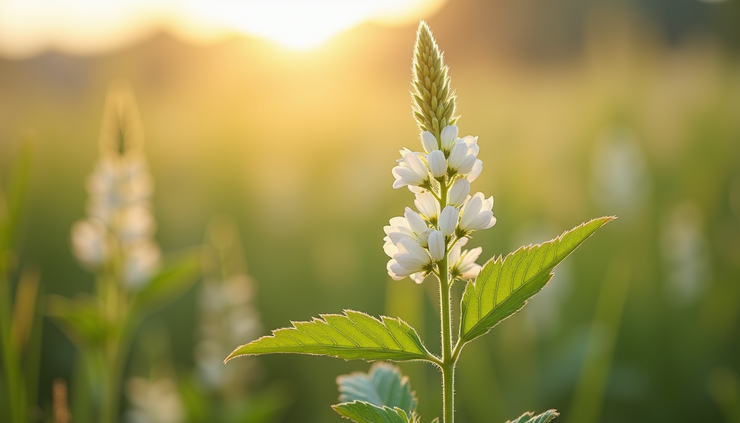
Stinging Nettle and Companion Plants
We discussed stinging nettle and observed nearby flowering plants. There is a long-standing outdoor tradition that certain plants growing near nettle may help soothe stings (Dock leaf), though scientific evidence is mixed. This led to a great conversation about traditional knowledge, observation, and scientific testing.
Learn More:
Stinging Nettle Identification:
dock leaf: https://youtube.com/shorts/mrv6JCiNA-w?si=lsNuHOQrK58t2-2e
Why We Give Kids Time to Make Mistakes
One of the things I appreciate most about our program is its pace.
Our days are long enough that we don't have to rush kids from one activity to the next. We are out there for five hours! We aren't constantly watching the clock or worried about squeezing everything into a short window.
That gives students something increasingly rare:
Room to make mistakes.
If we choose the wrong route, that's okay.
If we misread a map, that's okay.
If our assumptions turn out to be incorrect, that's okay.
Those moments become opportunities instead of problems.
Today's navigation challenge was a perfect example. Students had to wrestle with uncertainty, make decisions, evaluate outcomes, and adjust when necessary. Those experiences create lessons that are far more meaningful than simply being told the correct answer from the beginning.
Maps That Came to Life
As we continued climbing, the terrain naturally provided opportunities to discuss topographic maps.
We experienced steep grades, gradual slopes, ridgelines, and broad flat areas. Rather than sitting down for a single "map lesson," we were able to teach concepts exactly when they became relevant.
After climbing a steep section and emerging onto a flatter area, we stopped and compared our experience to the contour lines on the map.
The students could immediately see that closely spaced contour lines represented steeper terrain while wider spacing indicated flatter ground.
Because they had just felt the climb in their legs, the lesson became tangible.
This is one of the strengths of outdoor education. Instead of learning abstract concepts in isolation, students encounter them in real life first and then connect those experiences back to the academic principles behind them.
Those are often the lessons that stick.

Building Friendships Faster
Our summer programs bring together a different mix of students more often than our longer fall and winter semesters.
Because students may only spend a limited amount of time together, we've intentionally incorporated activities that help them build meaningful relationships quickly.
Over the past several weeks we've used a variety of "get to know you" challenges and team-building activities that encourage students to share about themselves, work together, and occasionally step outside their comfort zones.
We're really glad we made that decision.
The friendships developing within this group have been remarkable to watch. Students who were complete strangers a few weeks ago are now cheering each other on, collaborating naturally, and genuinely enjoying each other's company.
Building Towers From Nature
One of today's team challenges involved constructing the tallest freestanding structure possible using only natural materials found in the area.
The creativity on display was incredible.
Students gathered branches, logs, and natural supports and engineered towering structures that seemed almost impossible at first glance.
The challenge required teamwork, experimentation, communication, and problem-solving. Some designs collapsed and had to be rebuilt. Others required students to rethink their approach entirely.
Watching the teams work through those challenges together was every bit as rewarding as seeing the final structures.

Howling Across the Mountain
One of the most memorable moments of the day came from an unexpected connection with the younger group.
After crossing over a section of mountain we had never explored before, we eventually reached a peak overlooking areas we had previously visited.
From our vantage point, we could hear the younger group somewhere down in the valley below.
Naturally, the teens decided to howl.
On the count of three, the entire group let out a long howl across the mountainside.
Moments later, the younger group answered.
Back and forth the howls went, echoing across the valley.
I loved this moment because it perfectly captured the spirit of the group. Nobody was worried about looking silly. Nobody was too cool to participate.
They were simply enjoying the experience.
Exploring New Country
As we descended from the ridge, we entered a series of beautiful green meadows hidden from view below.
One of the joys of exploring unfamiliar terrain is discovering places you never knew existed. These quiet grassy pastures felt like hidden rooms tucked away in the mountains.
Eventually we reached a beautiful riverside area and realized we had plenty of time before needing to return to the trailhead.
So we did something we value deeply at Sky River:
We stayed.
No rushing.
No checking boxes.
No hurry to move on.
Just time to enjoy where we were.

Special Projects
One of the unique elements of our teen program is the emphasis on long-term projects.
Each student selects a bushcraft-related project to work on over multiple weeks, allowing them to develop patience, craftsmanship, and ownership of their learning.
Today's projects included:
Flint knapping and arrowhead making
Building an atlatl and dart
Wooden bow
Traditional bow making
Working with clay
Cordage making
Spear construction
One student continues carrying a surprisingly heavy bag of flint everywhere we go in order to shape stone tools. Another is constructing an atlatl complete with a dart nearly as tall as he is.
The dedication these students show to their projects is impressive.
A Lesson in Resilience
One moment stood out above all others.
A student has spent this last week crafting a beautiful bow. She had invested significant time at home shaping, sanding, refining, and perfecting it. The craftsmanship was impressive and the finished product looked fantastic.
Today she proudly demonstrated it to the group.
It worked beautifully.
Then it broke.
In an instant, days of work was gone.
But What impressed me more than the bow itself was her response.
She felt the disappointment, acknowledged it, and you could almost see her decide in that moment that she wasn't going to let it ruin her day. The resilience of that girl in that moment was incredible!
Moments like that give us a genuine peek into someone else's character, and it was a beautiful example which I am so grateful that my own kids got to witness it.
The Grass Whistle Incident
The funniest moment of the day belongs entirely to Miss Katelyn.
She showed the students how to place a blade of grass between their thumbs and blow through it to create a surprisingly loud squeaking whistle.
What followed was complete chaos.
Every student immediately wanted to learn.
Suddenly dozens of people were experimenting, laughing, adjusting, and trying again.
Most attempts failed spectacularly.
Then someone would accidentally make the sound and burst into laughter.
Then someone else would figure it out.
Then everyone would start over again.
I tried it myself and could not stop laughing.
It was one of those wonderfully simple moments that nobody plans and nobody forgets.
Honestly, it may have been my favorite school moment in months.
Closing Circle
After packing up and hiking back to the trailhead, we gathered together one final time.
Our closing circles have become one of my favorite traditions.
Everyone comes together, arms around each other, and shares highlights from the day, reconnects as a group, and reflects on what we've experienced.
Today's cheer was appropriately ridiculous.
On the count of three, everyone blew their grass whistles at the same time, creating the most absurd collection of squeaks imaginable.
It was the perfect ending.
And then, as if nobody wanted the day to end, the soccer game started again and continued until families gradually headed home.


